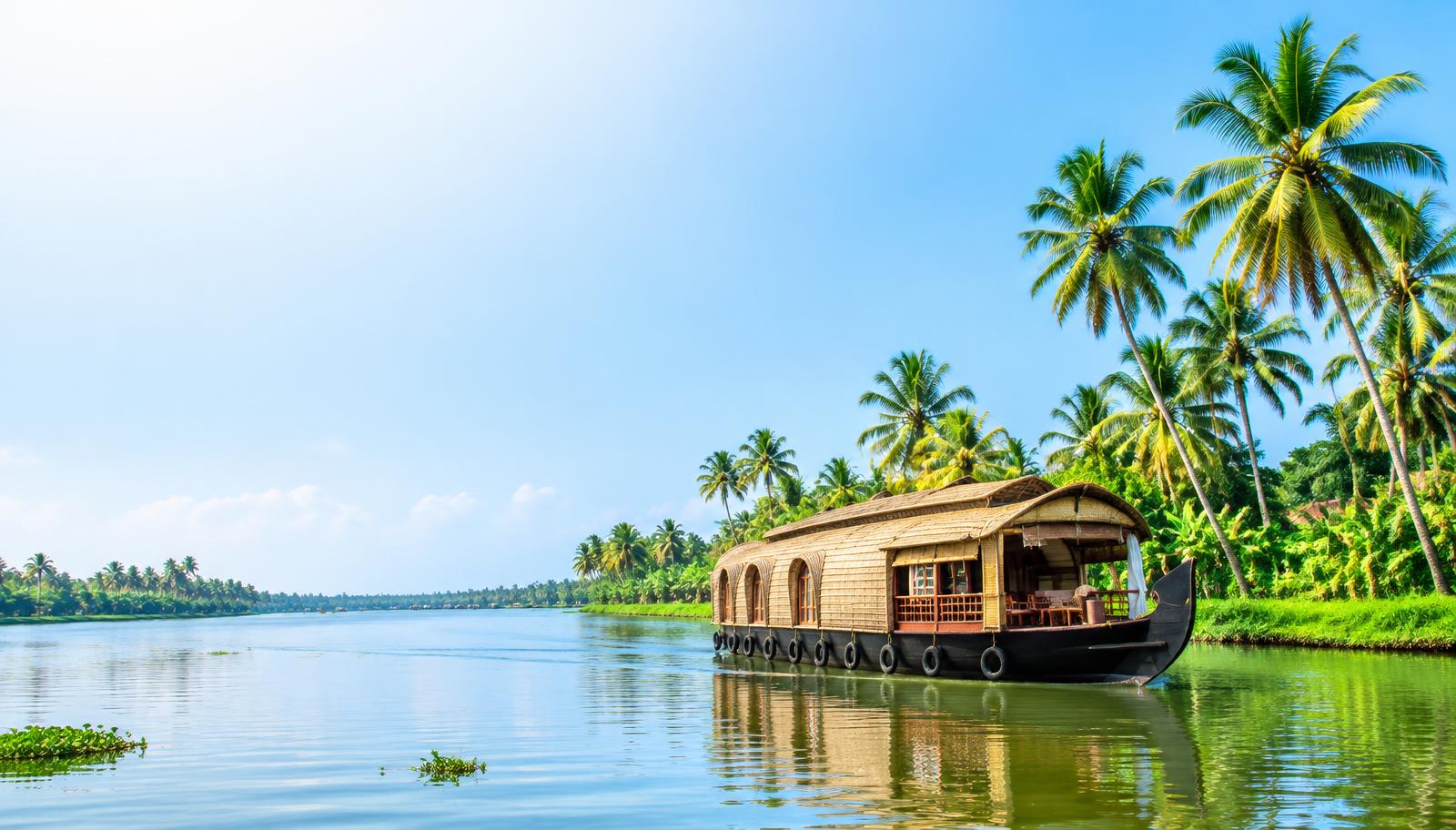
Location and landscape
Kidangoor is a settlement in Kottayam district, Kerala - Keralam, India, in the Meenachil River landscape. Although sometimes described as a town or city in location listings, it is administered as a gram panchayat rather than a municipal corporation. It lies along the Ettumanoor–Pala road corridor, connecting it with two important nearby towns.
The surroundings combine residential neighbourhoods, cultivated land, roadside businesses and river-linked lowlands. Coconut palms, rubber-growing plots and mixed home gardens contribute to the familiar central Travancore landscape. Heavy southwest monsoon rain shapes everyday life and farming. People choosing accommodation or travelling during intense rainfall should check current weather warnings and local road conditions, particularly near low-lying stretches.
History and heritage
Kidangoor’s heritage is closely associated with the Kidangoor Subrahmanya Swamy Temple, a prominent place of worship dedicated to Subrahmanya, also known as Murugan. The temple is recognised for its traditional architecture and koothambalam, a performance space associated with classical temple theatre. Its cultural significance extends beyond daily worship to the region’s artistic traditions.
Temple festivals bring together worshippers, performers and traders, but annual dates and visitor arrangements should be checked with the temple authorities. Accounts of the temple’s origins include religious tradition; precise dates or claims about its founding require reliable historical sources. Kidangoor also belongs to the wider historical landscape of Travancore, whose administrative, agricultural and educational development helped shape present-day Kottayam district.
People and culture
Malayalam is the principal language of everyday life. English is also used in education and some commercial settings, although visitors will find basic Malayalam phrases useful when asking directions or using local services. Hindu and Christian institutions contribute to the area’s social and cultural life, alongside schools, neighbourhood organisations and family networks.
Onam, Vishu, Christmas and religious festivals provide occasions for gatherings and community activities. Local food reflects central Kerala - Keralam cooking, with rice-based meals, coconut-rich preparations and dishes that vary by household and community. Visitors to places of worship should observe posted dress requirements, photography restrictions and rules governing access rather than assuming all spaces are open to sightseeing.
Livelihoods and economy
Kidangoor’s economy combines agriculture, retail trade, services and employment linked to nearby urban centres. Rubber cultivation is important across the surrounding Kottayam countryside, while coconut, banana and other crops feature in mixed holdings. Farm earnings can fluctuate with commodity prices, weather and labour availability.
Shops, workshops, transport services and small businesses serve residents and passing traffic. College of Engineering Kidangoor, established under the Co-operative Academy of Professional Education, is a notable educational institution. Student and staff activity supports demand for accommodation, food, transport and everyday services. Residents also travel towards Pala, Ettumanoor and Kottayam for work and specialised services.
Getting around and public services
Road transport is the main way to reach and move around Kidangoor. Buses connect the locality with surrounding towns, while autorickshaws and taxis can cover shorter journeys. Routes, frequencies and late-evening availability should be confirmed locally. Ettumanoor and Kottayam are useful railway access points, depending on the train and onward connection. Cochin International Airport is a practical airport option.
The gram panchayat is a starting point for enquiries about local roads, sanitation, civic records and welfare-related procedures. Schools, healthcare facilities and banking services are available locally or in nearby towns, with larger centres offering a wider range of specialist services. Confirm facility locations, eligibility requirements and operating hours through official sources before travelling.
Civic life and volunteering
Residents can participate in local decision-making through ward-level engagement and gram sabha meetings. Meeting notices, development proposals and service information should be checked through official panchayat channels.
Kudumbashree neighbourhood groups, educational institutions and community organisations offer possible routes into collective action. Useful volunteering priorities include waste segregation, public-space clean-ups, river protection and support for vulnerable households during severe weather. Prospective volunteers should coordinate with recognised local organisations or public authorities, especially for flood response, and avoid entering hazardous areas independently.