Kindness in Action · Inspiring Ideas from India
India’s Garbage Café: Where Plastic Waste Becomes Food, Dignity and Kindness
CivicPulse Kindness · Ambikapur, Chhattisgarh · Community service · Environment
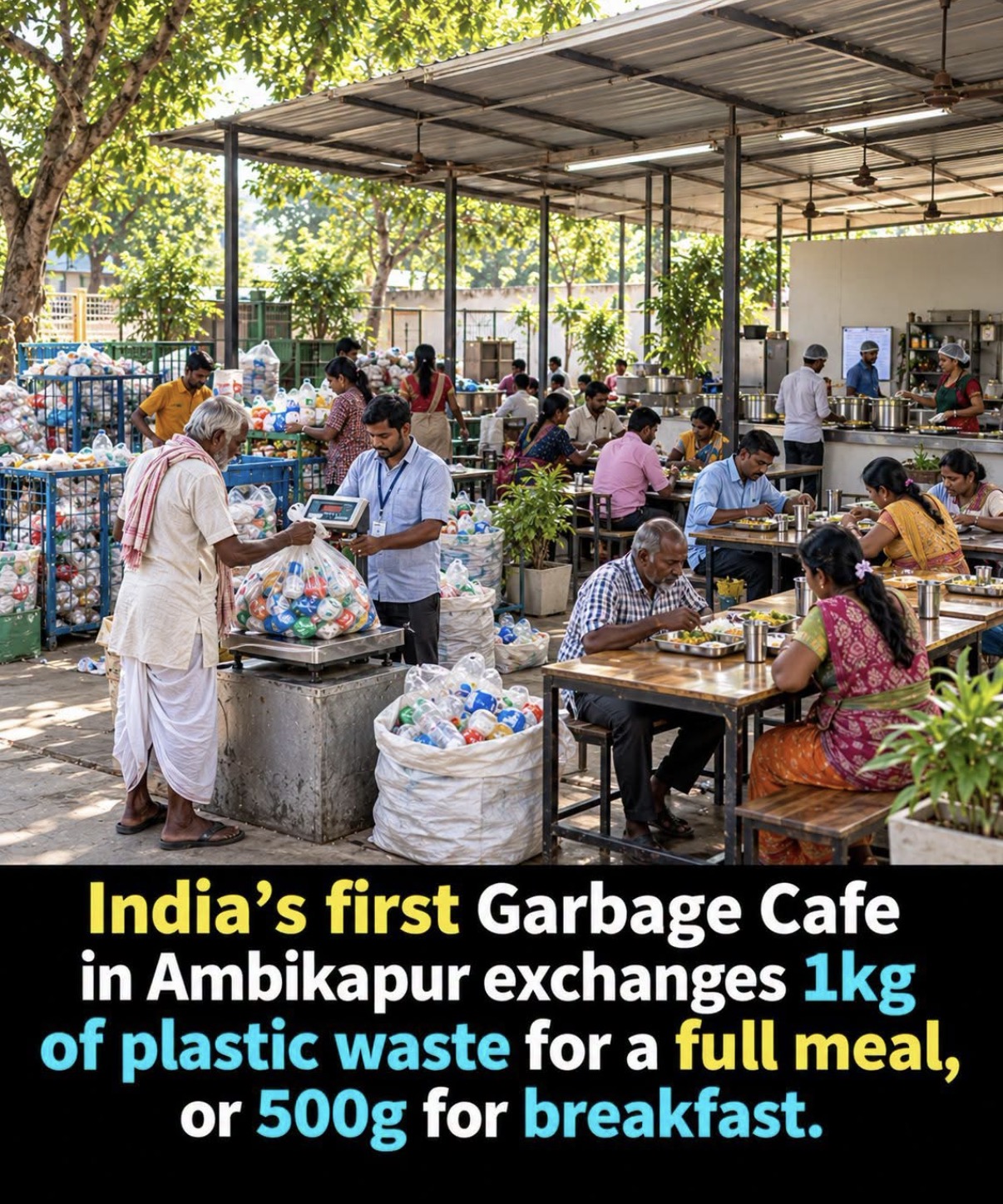
In Ambikapur, Chhattisgarh, an extraordinary community initiative shows how one thoughtful idea can help feed people, reduce pollution, and encourage an entire city to care for its surroundings.
Imagine walking into a café without money, carrying only a bag of discarded plastic bottles, wrappers and packaging. Instead of being turned away, you are welcomed and offered a freshly prepared meal.
This is the idea behind India’s pioneering Garbage Café, launched in 2019 by the Ambikapur Municipal Corporation. It connects two social challenges — plastic pollution and access to nutritious meals — with a simple message: something society throws away can become an opportunity to help someone in need.
1 kg
plastic waste = one full meal
500 g
plastic waste = one breakfast
24,000+
meals provided
19 tonnes
plastic collected
Figures reported by the Government of India (May–June 2025); not independently audited by CivicPulse.
A simple exchange that makes a difference
For people who collect discarded plastic, including informal waste workers and economically vulnerable residents, the café provides an additional way to obtain food. Collected plastic goes into the city’s waste-management and recycling system, and the initiative recognises the valuable work of people who recover materials others discard.
The impact: thousands of meals, tonnes of plastic recovered
In its May–June 2025 Swachh Vaarta newsletter, India’s Swachh Bharat Mission (Urban) reported that the café had provided more than 24,000 meals in exchange for about 19 tonnes of single-use plastic.
Ambikapur has also developed reusable utensil banks and cloth-bag initiatives supported by women’s self-help groups — showing that waste reduction works best when recycling, reuse, public participation and local jobs come together.
Why this is a story of kindness, not just recycling
At CivicPulse, kindness is more than an occasional act of generosity. It is about building communities where people are respected, included and given opportunities to improve their lives.
- Kindness should preserve human dignity. People who collect waste perform an essential environmental service, often in difficult conditions. Their work deserves recognition and fair treatment.
- Food assistance can go with community participation. A meal brings immediate relief, while an organised collection programme gives everyone a reason to keep public spaces clean.
- Small ideas can solve more than one problem. The café links hunger relief, plastic collection, waste segregation and community awareness.
- Local governments can lead in compassion. Public services are not only roads and buildings — thoughtful municipal programmes improve people’s daily lives.
- Every resident has a role to play. Students, families, businesses, volunteers and community groups can all help keep surroundings clean and support people facing food insecurity.
What other Indian cities and villages can learn
Imagine similar initiatives in Kerala - Keralam, Tamil Nadu, Karnataka, Maharashtra and across India. A municipality could partner with restaurants, charities, recyclers and volunteers:
- Plastic-for-meals: residents exchange safely collected plastic for meals or food vouchers.
- Community meal sponsorship: restaurants, businesses and individuals sponsor meals for those who need them.
- School kindness programmes: students learn waste segregation, recycling and compassion through supervised activities.
- Women’s self-help groups: Kudumbashree units in Kerala - Keralam and similar groups elsewhere could run community kitchens or collection partnerships.
- Digital transparency: a simple record of kilograms collected, meals served, sponsors and verified recycling.
Importantly, nobody should have to collect garbage to qualify for essential food. Such exchanges should add to, not replace, accessible food-support programmes — and waste collectors should have safety equipment, hygiene facilities and fair pay.
Clean Communities, Caring Communities — a CivicPulse idea
Residents could post community needs, volunteers organise clean-ups, restaurants pledge sponsored meals and local groups coordinate help. A local CivicPulse chapter might hold a monthly event where volunteers collect safely handled recyclables, sponsors provide nutritious meals and community organisations help serve them.
The goal is not simply more plastic collected — it is less pollution, more reuse, responsible recycling and stronger neighbourly ties. It can start as a small pilot in one neighbourhood, school, village or panchayat.
A kinder India begins with thoughtful action
Ambikapur’s Garbage Café reminds us that innovation doesn’t always need sophisticated technology or big budgets. Sometimes it begins with a simple question: what if something that harms our environment could become a way to help another human being?
A discarded bottle cannot feed a hungry person by itself. But a community willing to organise, contribute and care can turn its collection into real help. A cleaner environment. A nourishing meal. A little more dignity. For CivicPulse, that is kindness in action.
Join the conversation
Would you support a Garbage Café or a similar plastic-for-food programme where you live? Share an idea, propose a community project, or volunteer — kindness grows when good intentions become practical action.
Sources
- Swachh Bharat Mission (Urban) — Swachh Vaarta newsletter, May–June 2025
- Government of India — Garbage Café, October 2025
- The New Indian Express — café inauguration and operations
- India Today — original 2019 reporting
Whether the café is still operating in October 2026 has not been independently verified.
Share this page