Ten Simple Changes That Could Make India More Civilized, Courteous, and Compassionate
My observations and reflections while traveling in India.
India is a wonderful country with a rich cultural heritage, strong family values, and a long tradition of hospitality. Yet, during my travels, I have noticed several everyday habits that I wish more of us would embrace to make our society more courteous, considerate, disciplined, and compassionate.
Civilization is not measured merely by economic progress, modern infrastructure, impressive buildings, or technological achievements. It is also reflected in how we treat one another, especially strangers, elders, pedestrians, and those who help us in small ways.
Here are ten simple practices that could make a remarkable difference in our everyday lives.
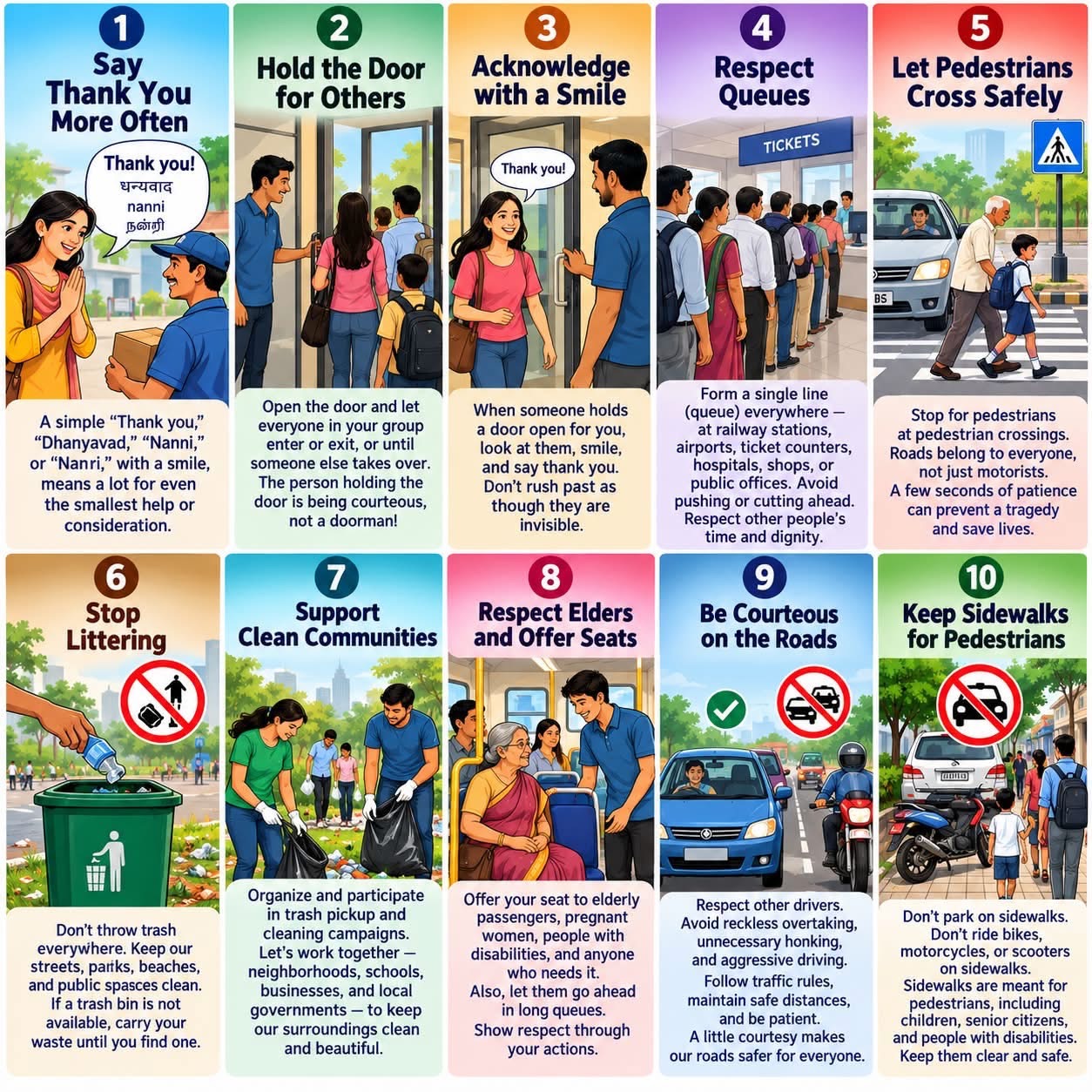
- 1
Say “Thank You” More Often
A simple “Thank you,” “Dhanyavad,” “Nanni,” or “Nanri,” accompanied by a genuine smile, costs nothing but means a great deal. Whether someone offers assistance, shows consideration, or performs a small act of kindness, acknowledge it with gratitude. Courtesy should become a natural part of our daily interactions.
- 2
Hold the Door Open for Others
When entering or leaving a building, hold the door for those following you. Continue until everyone in your group has passed through or someone else takes over. And remember, the person holding the door is extending a courtesy, not working as your personal doorman!
- 3
Acknowledge Kindness with a Smile
When someone holds a door open for you, look at them, smile, and say thank you. Don’t simply rush past as though the person were invisible. A moment of acknowledgment shows respect and appreciation.
- 4
Respect Queues and Wait Your Turn
Whether at a railway station, airport, ticket counter, hospital, shop, or public office, form an orderly, single-file queue. Avoid pushing, crowding, or cutting ahead. Respecting a queue means respecting other people’s time and dignity.
- 5
Give Pedestrians the Right of Way
Pedestrian crossings should be places of safety, not danger. Drivers must slow down and stop when pedestrians are crossing. Roads belong to everyone, not just motorists. A few seconds of patience can prevent a lifetime of tragedy.
- 6
Stop Littering Our Beautiful Country
India is blessed with extraordinary natural beauty, yet too many public spaces, roadsides, waterways, and neighborhoods suffer from careless littering. Dispose of waste responsibly. If a trash bin is unavailable, carry your waste until you find one. Cleanliness begins with individual responsibility.
- 7
Make Community Cleanliness a Shared Responsibility
Neighborhoods, businesses, schools, and local governments should work together to organize regular waste collection, recycling programs, and community cleanup campaigns. Instead of waiting for someone else to clean our surroundings, let us take collective ownership of our public spaces.
- 8
Show Greater Consideration for Elders and Those in Need
Offer your seat to elderly passengers, pregnant women, small children, people with disabilities, and anyone who may need it more than you do. Extend the same courtesy in long queues by allowing those who genuinely need assistance to move ahead. Respect for elders should be demonstrated through actions, not merely words.
- 9
Practice Patience and Courtesy on the Roads
Driving should not be a competition to see who can get ahead first. Avoid reckless overtaking, unnecessary honking, aggressive driving, and dangerous maneuvers. Respect traffic rules, maintain safe distances, and show consideration for fellow motorists, cyclists, and pedestrians. A little patience makes the roads safer for everyone.
- 10
Keep Sidewalks Safe and Accessible
Sidewalks are meant for pedestrians, not for parking cars or riding motorcycles and scooters. Blocking footpaths forces pedestrians, including children, senior citizens, and people with disabilities, onto dangerous roads. Respect pedestrian spaces and keep them clear.
A Final Thought
A nation’s greatness is reflected not only in what it builds, but also in how its people behave toward one another.
We often speak proudly of India’s ancient civilization, spiritual traditions, hospitality, and cultural values. Those ideals should also be visible in our everyday conduct.
We don’t need expensive government programs or sweeping reforms to begin making these changes. We can start with a smile, a thank you, a little patience, and a willingness to put someone else’s convenience or safety ahead of our own. Small acts of courtesy, repeated by millions of people every day, can transform the character of a nation.
Let us make India not only a country we are proud of, but also a country where kindness, courtesy, cleanliness, and consideration for others are part of everyday life.
These observations are offered in a spirit of constructive reflection, with affection for India and the hope that we can all contribute to making it a better place to live and visit.
Share this page